
Calendula is commonly called Pot Marigold, but it is not related to the marigolds you will find in local garden stores. In fact, it is part of the daisy family.
Calendula
(Calendula officinalis)
Common Name: Calendula, Pot Marigold
Plant Family: Asteraceae
Plant Part Used: Flowers
Extraction Method: Alcohol tincture, Glycerin, Apple Cider Vinegar, Water decoction, Oil infusion
Countries of Origin: Mediterranean region of Europe, south to Africa. It is now cultivated throughout the United States, Canada, and much of the world.
Properties: Antiseptic, Antibacterial, Anti-inflammatory, Nutritive
Therapeutic Uses: Cleans wounds, reduces inflammation, and soothes skin, moves lymph.
Energetics: Drying, cooling, moistening, warming (It all depends on the constitution of the person)
*Calendula may also cause an allergic reaction in people who are sensitive to flowers in the daisy family. Discontinue use if a reaction occurs.
*GRAS (generally regarded as safe for everyone)
Calendula are multi-petaled flowers that come in shades of yellow and orange with centers of yellow, orange, or brown. There is one main stem with oval-shaped offset leaves. The main stem will grow from 12 to 20 inches tall and branch off as flowers develop. It grows in almost any soil. It loves full sun but will not mind some shade in zones where the sun is too hot. It is considered an annual, but it self-sows very easily so you may find some of its brilliance returning each year.
Calendula is a versatile herb. As a fresh-cut flower arrangement, they add a burst of sunshine to any room. By infusing the dried blossoms in carrier oil, you will create a beautiful skin-nourishing base for salves, lotions, and massage oils. But its aesthetic and topical properties are only a part of Calendula’s story. The flower heads are also lovely as a vibrant and nutritious addition to salads, stir fry, and tea blends.
Rosemary Gladstar writes “Calendula is a powerful vulnerary, healing wounds by promoting cell repair and growth.” It has been used to treat wounds, burns, rashes, and skin infections. Rosemary also says that this is the one plant she turns to for swollen glands because of its affinity to move lymph.(Gladstar, 2012)
It has also been used in ointment form, with patients who receive radiation treatments for breast cancer. It has been found to help with irritating dermatitis that can occur because of the treatment. It is thought that the skin healing properties come from triterpenoid compounds inhibiting bacteria and acting as antioxidants reducing damage from free radicals. (Johnson, 2010)
Rosalee De La Foret says it best. “Think of calendula as an all-purpose plant for any manner of skin problems.”
Calendula, however, is more than a pretty flower that is great for the skin. It also helps the inside of the body. Being a lymph mover, it helps maintain a healthy immune system.
We have come to learn; that a great deal of our immune system lies within the gut. As a nutritive herb with astringent properties, calendula can be used with other astringent herbs, such as blackberry root, to ease cases of intestinal upset and diarrhea.
But Calendula does double duty as it is not only astringent but demulcent also. What this means is while it can be used to dry up excess mucous it also soothes the mucous membranes while it does this. Combined with Plantain, de la Foret writes that it can work to heal damage from leaky gut syndrome. (Foret, 2022)
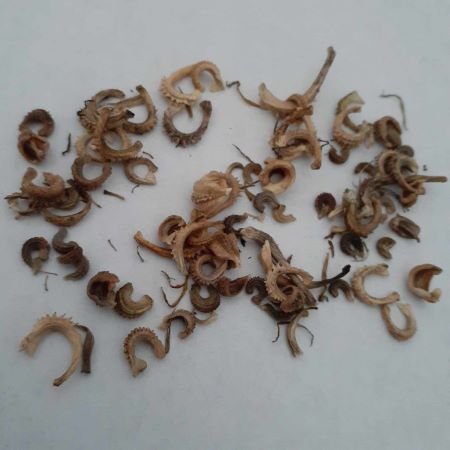
Calendula seeds remind me of little prehistoric bones. They are “C” shaped with little spines on the outside of the curve.
With all these benefits why wouldn’t you want Calendula growing in your garden or on pots on the patio? Summer is here. It’s time to think about growing some sunshine.
They are not extremely picky when it comes to planting. I have made a shallow row (about ½ inch deep) and spread the seeds along the row. I have also scattered seeds on the top of undisturbed ground. Both grew. I will also mention that I have let flowers go completely to seed and let them do their thing naturally, giving me random flowers throughout my vegetable garden.
The plants love sunshine but as mentioned earlier, will do alright in some shade, especially where it gets very hot. Water them regularly but they will do ok if they dry out a bit. They are one of the easiest flowers I have grown.
To harvest the blossoms, go out in the morning when the dew has had a chance to dry. Calendula is a resinous plant so be prepared for the sticky resin to get on your fingers.
Follow the flower stem to the first set of branching leaves off the main stem and cut there. This should give you a long enough stem to display as cut flowers. This also signals the plant to produce more. Calendula will continue to produce from first bloom until the first frost if you continue to cut a few flowers. Always leave some for the bees and the simple beauty of the plant.
Drying the flowers may take some time and patience. You can do so by laying the flowers flat on a screen in a dry ventilated area out of the sun. If you live in a humid climate, you may need to dry in a dehydrator or your oven on the very lowest setting. To store the flowers, or to infuse them in any kind of oil, they must be thoroughly dry. The tiniest bit of moisture can lead to mold, and we don’t want that.
If you would like to add a bit of color to your dinner, pull the bright yellow or orange petals from the flower head and sprinkle them on your favorite dish. Surprise your guests.
Blossoms can also be made into medicinal tea. Rosalee suggests 1 ounce of flowers to a quart of just boiled water. Steep for 4 to 8 hours. Strain and drink throughout the day. This will be bitter as some medicinal teas are, but this will help the liver and the immune system. (De La Foret, 2022)

Calendula is one of my favorite flowers. There are roses and lavender, but I’m claiming Calendula as my favorite. Who can resist the brilliant colors that are a reminder of summer sunshine? It is very easy to grow, the scent is amazing, and it attracts pollinators and big fuzzy bumble bees. Even if it had no medicinal properties, it would be growing in my garden every year. What a bonus for us that it has so many.
Sunshine in a jar
References
FORET, R. D. (2022). HERBAL ADVICE CALENDULA BENEFITS. RETRIEVED FROM HERBS WITH ROSALEE: HTTPS://WWW.HERBALREMEDIESADVICE.ORG/CALENDULA-BENEFITS.HTML
GLADSTAR, R. (2012). MEDICINAL HERBS, A BEGINNERS GUIDE. NORTH ADAMS: STOREY PUBLISHING.
JOHNSON, R. L. (2010). NATIONAL GRAPHIC GUIDE TO MEDICINAL HERBS. WASHINGTON: NATIONAL GEOGRAPHIC SOCIETY.



 Scented By Nature